



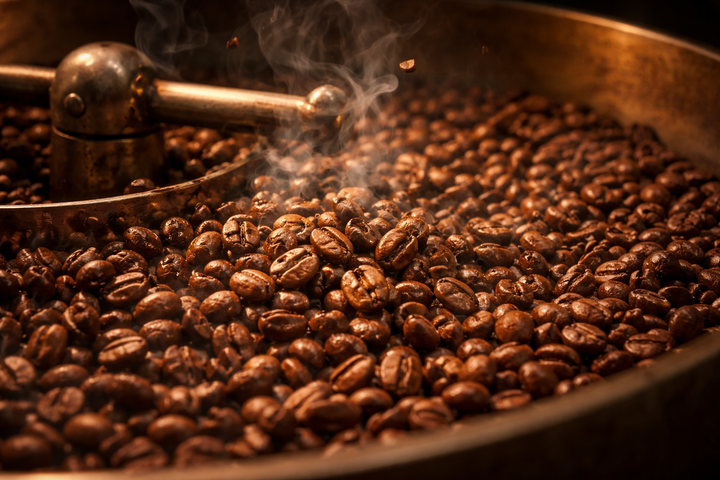

There are mainly two major types of coffee beans consumed worldwide: Arabica and Robusta, supplemented by the lesser-known varieties Liberica and Excelsa.
Flavour profiles of the beans
- Arabica (Coffea arabica): This bean is widely considered to be of the highest quality and accounts for around 60% to 70% of global production. Arabica has a refined, complex flavour profile with notes of sweetness, light acidity, and floral or fruity aromas. The bean contains about half the caffeine of Robusta.
- Robusta (Coffea canephora): This bean is stronger and more bitter. Its flavour profile is often described as earthy, woody, or even with notes of burnt rubber, but with a heavy body and rich mouthfeel. Robusta contains significantly more caffeine (almost double that of Arabica) and produces a thicker crema layer on espresso.
- Liberica & Excelsa: Liberica is rare and has a unique profile described as smoky, woody, and floral. Excelsa, a subspecies of Liberica, is known for its fruity and tart notes, such as grapefruit and raspberry.
Choosing the right bean for each coffee type
The choice of a specific bean heavily depends on the brewing method and whether you add milk:
-
Espresso: For this, blends of dark-roasted Arabica beans or a mix of Arabica and Robusta are often used. The addition of Robusta gives espresso more "oomph", higher intensity, and a stronger crema layer. For a pure, fruity espresso, you can choose single-origin beans from Ethiopia or Kenya, although these can sometimes be perceived as too acidic.
-
Ristretto: Because this is a shorter, concentrated extraction that emphasizes the initial sweet notes, Brazilian or Colombian beans are very suitable. These naturally have subtle chocolate notes that come into their own in a ristretto.
-
Cappuccino and Latte: For milk-based drinks, you need a bean that "cuts through the milk". Indonesian beans (such as Sumatra) are ideal for this due to their earthy, full flavour and low acidity, which prevents them from getting lost in the milk. Dark-roasted beans with an oily surface are also recommended, as their sharp taste complements the sweetness of milk fat and milk sugar well.
-
Filter coffee (Drip coffee): This method brings out the delicate characteristics of the bean best. Choose light or medium-roasted Arabica beans from regions such as Ethiopia (floral/fruity) or Central America (balanced/nutty) to taste the natural flavours of the origin.
-
Lungo: This is a longer espresso extraction that can often taste bitter if the roast is too dark. However, modern lungos made from lightly roasted espresso beans can be very complex and balanced.
- Americano: An espresso diluted with hot water. Single-origin beans with a medium roast, such as from Ethiopia (Harrar) or Sumatra, retain their aromatic qualities well in this extended drink.
In summary: Use Arabica for subtle flavours and filter methods, consider a blend with Robusta or a strong Sumatran bean for espresso and milk varieties like cappuccino. For a Lungo, preferably choose a lighter roast to avoid bitterness, and for an Americano, experiment with single-origin beans (such as from Ethiopia or Sumatra) to find the desired balance between the strength of espresso and the lightness of filter coffee.